When summer temperatures climb across Bensalem and the greater Philadelphia area, a properly functioning air conditioner is not just a luxury — it is a necessity. So when you notice your AC is running but the air coming from your vents is warm or barely cool, it can be both uncomfortable and alarming. Before you panic, it helps to understand that many AC cooling problems stem from common, identifiable causes. Some you can address on your own, while others require the expertise of a trained HVAC technician.
Start with Your Thermostat
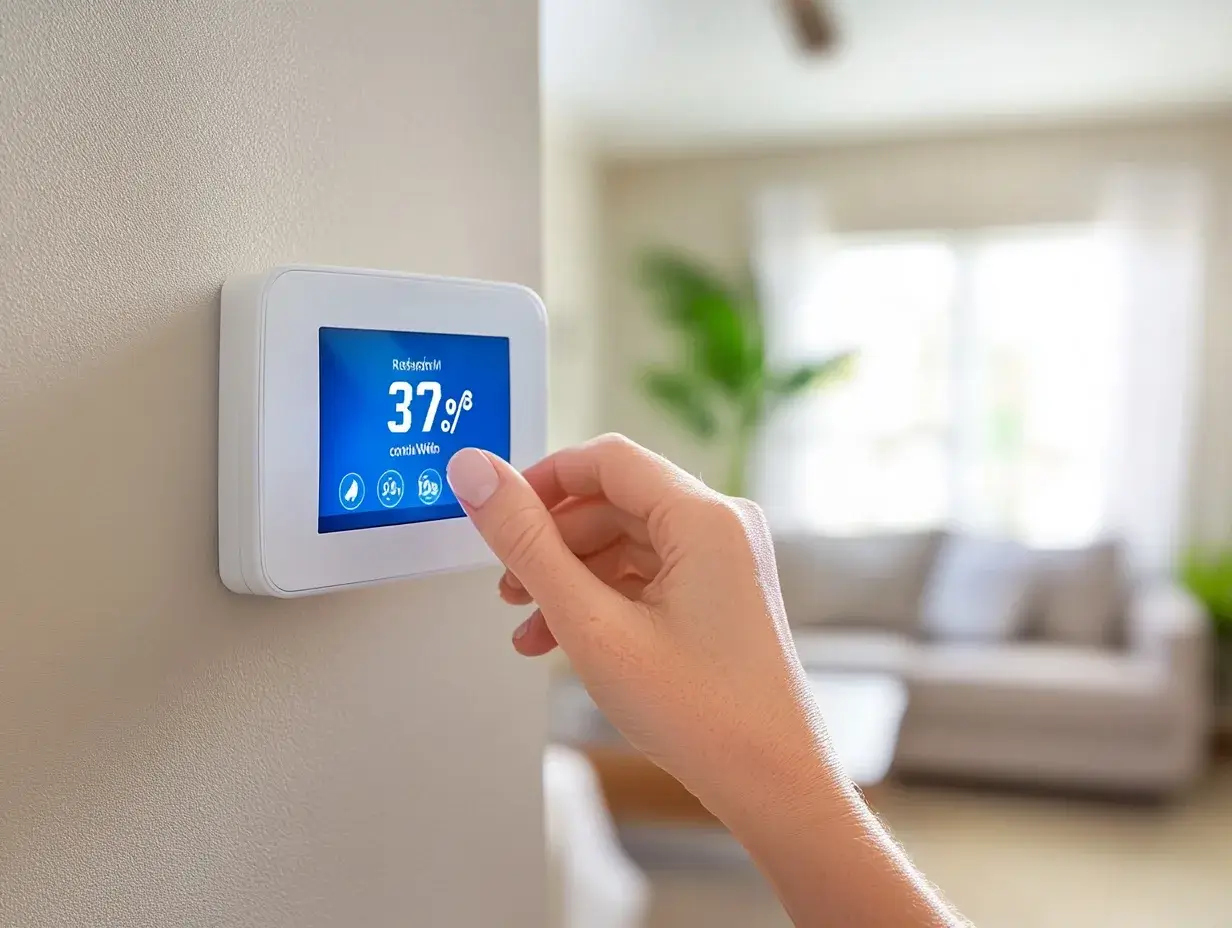
It might seem too simple, but incorrect thermostat settings are one of the most overlooked reasons an air conditioner fails to cool properly. Make sure your thermostat is set to “Cool” mode and that the fan is set to “Auto” instead of “On.” When the fan runs continuously in the “On” position, it circulates air even when the compressor is not actively cooling. This means you will feel room-temperature air blowing from the vents between cooling cycles, which can make it seem like your AC is not working.
Also double-check that the set temperature is lower than the current indoor temperature. If a family member or a curious child bumped the thermostat, the system may not be triggering a cooling cycle at all. If you have a programmable or smart thermostat, review the schedule to ensure it has not reverted to a default setting or switched to a seasonal mode.
Dirty or Clogged Air Filter
A clogged air filter is the single most common reason for reduced cooling performance. Your AC system relies on a steady flow of air passing over the evaporator coil to absorb heat from your home. When the filter is packed with dust, pet dander, and household debris, it chokes off that airflow. The evaporator coil cannot absorb enough heat, the system works harder than it should, and the air reaching your rooms feels lukewarm at best.
In severe cases, restricted airflow can cause the evaporator coil to freeze over entirely, creating a layer of ice that blocks cooling altogether. If you notice ice forming on the indoor unit or refrigerant lines, turn the system off, let it thaw completely, and replace the filter before restarting. HVAC professionals recommend replacing your filter every 30 to 90 days during the cooling season, depending on your household conditions. Homes with pets or allergy sufferers should lean toward the shorter end of that range.
Frozen Evaporator Coil
A frozen evaporator coil is more than just an inconvenience — it is a sign that something in your system needs immediate attention. While a dirty filter is the most common trigger, a frozen coil can also result from low refrigerant levels, a malfunctioning blower fan, blocked return air ducts, or even running your AC when outdoor temperatures drop below 60 degrees Fahrenheit.
When ice builds up on the coil, it acts as an insulating barrier that prevents the refrigerant from absorbing heat. Your system continues to run, but the air it produces grows progressively warmer. If you find a frozen coil, switch the thermostat to “Off” or “Fan Only” to allow the ice to melt. Do not try to chip or scrape the ice away, as this can damage the delicate coil fins. Once the coil has fully thawed, check the filter and airflow before restarting. If the coil freezes again, it is time to call a professional to investigate the root cause.
Low Refrigerant Levels
Refrigerant is the lifeblood of your air conditioning system. It cycles between the indoor evaporator coil and the outdoor condenser, absorbing heat inside your home and releasing it outdoors. Your AC does not consume refrigerant the way a car burns fuel — it circulates the same charge in a closed loop. If refrigerant levels are low, it almost always means there is a leak somewhere in the system.
Signs of low refrigerant include warm air from the vents, hissing or bubbling sounds near the refrigerant lines, ice on the evaporator coil or copper tubing, and higher-than-normal energy bills without a corresponding increase in comfort. Refrigerant leaks are not a DIY fix. A licensed HVAC technician needs to locate the leak, repair it, and recharge the system with the correct type and amount of refrigerant. Simply topping off the charge without fixing the leak is a temporary solution that wastes money and harms the environment.
Dirty Condenser Coil and Outdoor Unit
The outdoor condenser unit is where your AC system expels the heat it has removed from inside your home. Over time, the condenser coil accumulates dirt, grass clippings, leaves, pollen, and other debris that insulate the coil and prevent it from releasing heat efficiently. When the condenser cannot dissipate heat properly, the entire system loses cooling capacity and your indoor comfort suffers.
You can help maintain your outdoor unit by keeping the area around it clear. Trim back shrubs, plants, and grass to maintain at least two feet of clearance on all sides. Gently rinse the coil fins with a garden hose periodically to remove surface buildup — always spray from the inside out to push debris away from the coil rather than deeper into it. Avoid using a pressure washer, as the force can bend the delicate fins. For a thorough deep cleaning, schedule a professional maintenance visit.
Compressor Problems
The compressor is the heart of your air conditioning system. It pressurizes the refrigerant and circulates it between the indoor and outdoor coils to facilitate the heat exchange process. When the compressor begins to fail, you may notice that the system runs but produces little to no cooling, or that the outdoor unit makes unusual clicking, buzzing, or grinding sounds.
Compressor failures can be caused by electrical issues, refrigerant problems, overheating, or simply age-related wear. Because the compressor is both the most critical and most expensive component in your AC system, any suspected compressor issue should be evaluated by a qualified technician immediately. In some cases, a compressor can be repaired or replaced under warranty. In others, especially with older systems, a full unit replacement may be the more practical and cost-effective option.
Leaking or Damaged Ductwork
Your air conditioning system may be generating perfectly cold air, but if the ductwork delivering it throughout your home has leaks, gaps, or poor insulation, a significant amount of that cooled air never makes it to your living spaces. Ducts that run through hot attics, unconditioned crawl spaces, or sun-exposed areas are especially vulnerable. Cooled air escapes through holes and loose connections, while hot air from surrounding spaces gets pulled in.
The result is air that feels noticeably warmer by the time it exits your vents, uneven temperatures between rooms, and an air conditioner that seems to run constantly without keeping your home comfortable. Professional duct sealing and insulation can recover a substantial amount of lost cooling capacity and reduce your energy costs significantly. If certain rooms in your home are always warmer than others despite adequate vent coverage, leaky ducts are a strong possibility.
Electrical and Capacitor Issues
Your air conditioning system depends on a network of electrical components to function properly. Capacitors provide the initial energy burst that starts the compressor and fan motors, while contactors control the flow of electricity to major components. Over time, capacitors weaken and contactors can become pitted or corroded, leading to intermittent cooling, hard starting, or complete system failure.
Warning signs of electrical problems include the outdoor unit humming but not starting, the system cycling on and off rapidly, a burning smell from the outdoor or indoor unit, or tripped circuit breakers. Electrical work on an AC system involves high-voltage components and should always be handled by a licensed professional. Attempting to diagnose or repair capacitors, contactors, or wiring without proper training can result in serious injury or further damage to your equipment.
Undersized or Aging AC System
Sometimes the problem is not a malfunction at all — your air conditioner may simply be too small for your home or too old to keep up with demand. An undersized unit will run continuously on the hottest days without ever reaching the desired temperature because it lacks the capacity to cool the full volume of your space. Meanwhile, a system that is 10 to 15 years old may have lost a significant portion of its original efficiency due to normal wear and declining component performance.
If your AC has always struggled on extremely hot days, or if you have added living space to your home since the unit was installed, the system may need to be upsized. If the unit is aging and repairs are becoming more frequent and expensive, replacing it with a modern, energy-efficient model can dramatically improve comfort while reducing your monthly energy bills. A professional load calculation can determine exactly what size system your home requires.
Prevent Cooling Problems with Routine Maintenance
The best way to avoid the frustration of an AC system that is not cooling is to stay ahead of problems with regular professional maintenance. An annual tune-up performed before the cooling season allows a technician to clean coils, check refrigerant levels, inspect electrical connections, test system performance, and catch minor issues before they become major breakdowns during the peak of summer heat.
Region Home Services has been the trusted HVAC partner for homeowners in Bensalem, PA, and the surrounding communities for nearly 50 years. Whether your air conditioner is blowing warm air, making strange noises, or simply not keeping up with the summer heat, our experienced technicians will diagnose the issue quickly and get your comfort restored. Call us at 215-639-0424 or schedule a service appointment online today.
3 Responses