
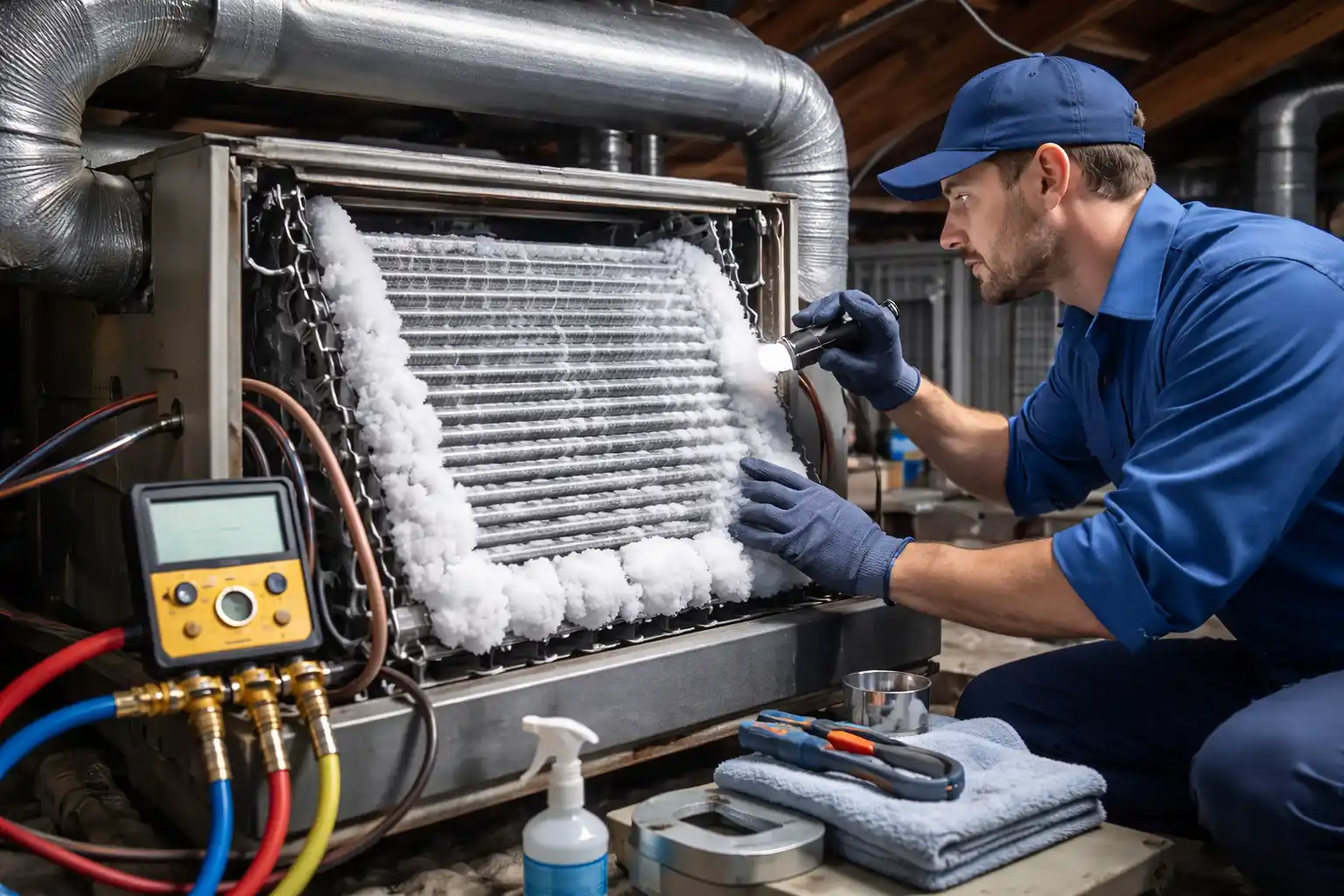
Frozen AC coils are a common issue that many homeowners face, yet they can often be overlooked until they significantly impact the performance of your air conditioning system. When the coils freeze, they prevent the refrigerant from properly circulating, which results in the system not being able to cool the air effectively. This issue can cause your air conditioner to work harder, consume more energy, and even lead to long-term damage. Understanding the causes of frozen coils and how to fix them is essential for keeping your AC unit running efficiently and preventing costly repairs or the need for a complete system replacement.
Introduction
Frozen AC coils can cause your air conditioner to malfunction, leading to warmer temperatures in your home and potential damage to the system. When the evaporator coil freezes, it blocks the flow of refrigerant, causing the cooling process to halt. This problem can arise for several reasons, including poor airflow, refrigerant issues, or dirty components. Recognizing the signs early and addressing the root causes can help ensure your air conditioning system continues to function properly.
It’s crucial to address frozen coils immediately to avoid more severe damage to your system. Whether it’s a blocked vent, a dirty filter, or an issue with refrigerant levels, the problem can worsen if not resolved promptly. In such cases, it’s a good idea to seek professional assistance for expert HVAC repairs to restore the system to its optimal condition and avoid costly breakdowns in the future.
Evaporator Coil vs. Condenser Coil
To understand the causes of frozen coils, it’s important to differentiate between the two main types of coils in your air conditioning system: the evaporator coil and the condenser coil. The evaporator coil is located inside the air handler and is responsible for absorbing heat from the air inside your home. As the refrigerant inside the coil evaporates, it cools the air circulating through the system, reducing the temperature in the room.
The condenser coil, on the other hand, is located outside the unit and is responsible for expelling the heat absorbed by the refrigerant. It releases the heat into the outside air. While the evaporator coil is the more common culprit for freezing, a frozen condenser coil can also occur under certain conditions, such as low refrigerant levels or poor airflow. Proper airflow through both coils is essential for the efficient operation of the air conditioning system, which is why regular professional AC maintenance is key in preventing freezing issues.
How to Know if Your AC Coils Are Frozen
Recognizing the signs of frozen AC coils early on can help you address the problem before it leads to further damage. Here are the most common signs that your AC coils are frozen:
- Reduced cooling efficiency: You may notice that your AC is not cooling as effectively, or the air feels warmer than usual.
- Ice buildup: Ice may form on the evaporator coil or refrigerant lines. This is a clear indicator that the coils are frozen.
- Unusual noises: Hissing or gurgling sounds might be heard as the refrigerant struggles to flow through the system.
- Water pooling around the unit: As the ice melts, water may accumulate around the AC unit, potentially causing water damage if left unaddressed.
Causes of a Frozen Evaporator Coil
There are several potential causes for a frozen evaporator coil, and understanding these causes is crucial for effective troubleshooting and repair. The most common reasons include poor airflow, dirty components, or refrigerant issues. Let’s take a closer look at the specific causes:
Dirty Air Filter
A dirty air filter is one of the most common causes of frozen evaporator coils. When the air filter becomes clogged with dust and debris, it restricts airflow to the evaporator coil. Without sufficient airflow, the coil cannot absorb heat from the air effectively, and it begins to freeze. Replacing or cleaning the air filter regularly is an easy and effective way to ensure proper airflow and prevent coil freezing. If you haven’t changed your filter in a while, it may be time to replace it. A clean filter also helps with overall air quality and efficiency, reducing the likelihood of having to call for costly professional air conditioning repairs.
Dirty Evaporator Coil
Over time, dirt, dust, and debris can accumulate on the evaporator coil, causing it to become less efficient in absorbing heat. When the coil is dirty, it becomes less effective at performing its job, and the temperature drops to the point where freezing occurs. Cleaning the evaporator coil is a more complex task that may require professional help, but it is essential to ensure that your air conditioning system runs at peak efficiency.
Blocked Return Vents
Blocked return vents can lead to a lack of airflow, which causes the evaporator coil to freeze. If furniture, curtains, or other objects block the vents, the air cannot flow freely into the system, which disrupts the cooling process and leads to ice formation. Make sure that the return vents are clear of any obstructions to maintain proper airflow throughout the system.
Another important factor is the placement of furniture. If large furniture pieces are placed too close to vents, airflow can be obstructed. Additionally, ensure that any other ventilation openings in the system are clear. If these vents are blocked for an extended period, it can lead to long-term freezing issues that could require professional HVAC repair services.
Regular checks on your return vents can help prevent these types of blockages. Simply make sure they are unobstructed and that air can flow freely into the AC system for optimal performance.
Faulty or Broken Thermostat
A faulty thermostat can also lead to frozen coils. When the thermostat fails to accurately measure the temperature or maintain the correct settings, it may cause the AC system to run continuously. This constant cooling can cause the evaporator coil to become too cold and freeze. If you suspect that your thermostat is malfunctioning, it’s a good idea to have it inspected and replaced by an HVAC professional to ensure the proper regulation of your system.
Refrigerant Leak/Low Refrigerant
A refrigerant leak or low refrigerant levels can cause the evaporator coil to freeze. The refrigerant is responsible for absorbing heat from the air, and when the levels are too low, the coil gets too cold, which causes ice to form. This problem can occur if there’s a leak somewhere in the system, or if the refrigerant was not properly charged during installation or maintenance.
If you suspect a refrigerant issue, it’s important to contact an HVAC technician as soon as possible. Low refrigerant levels can damage the compressor and other critical components of the air conditioning system. An experienced technician can locate and repair the leak and ensure the refrigerant is properly refilled, helping to restore your system’s efficiency and prevent further freezing issues. Don’t wait for the problem to worsen—schedule a consultation for installation of a new air conditioning system or necessary repairs to address any refrigerant issues before they cause irreversible damage.
What to Do if Your Coils Are Frozen
If you find that your AC coils are frozen, the first step is to turn off the air conditioning system to prevent further damage. Continuing to run the system while the coils are frozen can cause additional stress on the compressor and other components. Allow the coils to thaw naturally, which could take several hours depending on the extent of the freezing. You can place a fan near the unit to speed up the thawing process, but avoid using a hair dryer or other heat sources, as this could damage the coils.
Once the coils have thawed, inspect the unit for any visible signs of dirt, blockages, or damage. If you notice anything unusual or the coils freeze again, it’s time to contact a professional for an in-depth inspection. An HVAC technician can identify the underlying cause of the freezing and recommend the appropriate course of action, including cleaning, repairs, or replacing components. Regular service checks and prompt repairs are key to preventing recurring issues and keeping your system running smoothly.
How to Defrost AC Coils Fast
If you need to defrost your AC coils quickly, there are a few methods that may help speed up the process:
| Method | Details |
| Turn Off the AC | Shut off the AC and let the coils thaw naturally. This is the safest and most effective method, although it may take the longest. |
| Use a Hairdryer | If the ice is not too thick, you can gently use a hairdryer on a low setting to melt the ice. Be sure to keep the dryer at a safe distance to avoid damaging the coils. |
| Increase Room Temperature | Open windows or doors to allow warmer air to circulate around the unit. This will speed up the defrosting process naturally. |
Causes of a Frozen Condenser Coil
Frozen condenser coils are less common than evaporator coil freezing but can still occur, especially under extreme conditions. The condenser coil is responsible for releasing heat outside the unit, and when there’s inadequate airflow or low refrigerant levels, the coil can become too cold and freeze. Poor outdoor air circulation can also contribute to this issue, especially if the unit is placed in an area with limited airflow.
If your condenser coil is freezing, the issue might be related to low refrigerant levels or a blockage in the outside unit, such as dirt or debris on the coil. If you’re experiencing freezing in the condenser coil, it’s important to have the unit inspected by an HVAC professional to identify and resolve the issue before it causes further damage.
Regular inspections and professional maintenance can help keep your condenser coil in good working condition. Scheduling regular AC service appointments will ensure that both the evaporator and condenser coils are properly cleaned and functioning efficiently, preventing freezing and other potential issues.
Troubleshooting Frozen Coils
If you’re dealing with frozen coils, follow these steps to troubleshoot the issue and identify the root cause:
- Turn off the AC to allow the coils to thaw.
- Check the air filter and replace it if it’s dirty.
- Inspect the evaporator coil for dirt buildup and clean it if necessary.
- Ensure that return vents are not blocked by furniture or other obstructions.
- Check the thermostat to ensure it’s functioning properly and not running continuously.
- If the issue persists, contact an HVAC professional for a thorough inspection and necessary repairs.