
A heater that smells like burning plastic should never be ignored, especially if the odor appears suddenly, gets stronger, or continues after the system has been running for a while. In some cases, the smell comes from dust, packaging residue, or debris near hot components. In others, it may point to overheating plastic parts, damaged wiring, or a failing motor. Knowing the likely causes helps you respond quickly and safely before the issue becomes more serious.
Key Takeaways
A burning plastic smell from a heater can come from harmless debris, but it can also signal overheating parts or electrical trouble. Start by shutting the system off and checking for obvious dust or objects near vents. If the odor is sharp, persistent, or accompanied by unusual sounds, smoke, or poor performance, stop using the heater. Fast action matters because plastic and electrical smells can point to problems that worsen quickly when heat continues to build.
Heater Smells Like Burning Plastic? Here’s Why and What to Do
If your heater smells like burning plastic, the safest first step is to treat the odor as a warning sign instead of assuming it will go away on its own. Sometimes the cause is minor, such as dust or a small object near a vent, but a strong plastic smell may also indicate overheated components or electrical damage. Turn the heater off, inspect visible areas, and avoid restarting it until you have ruled out anything unsafe or arranged professional help for a heating system that may already be malfunctioning.
Why Does Your Heater Smell Like Burning Plastic?
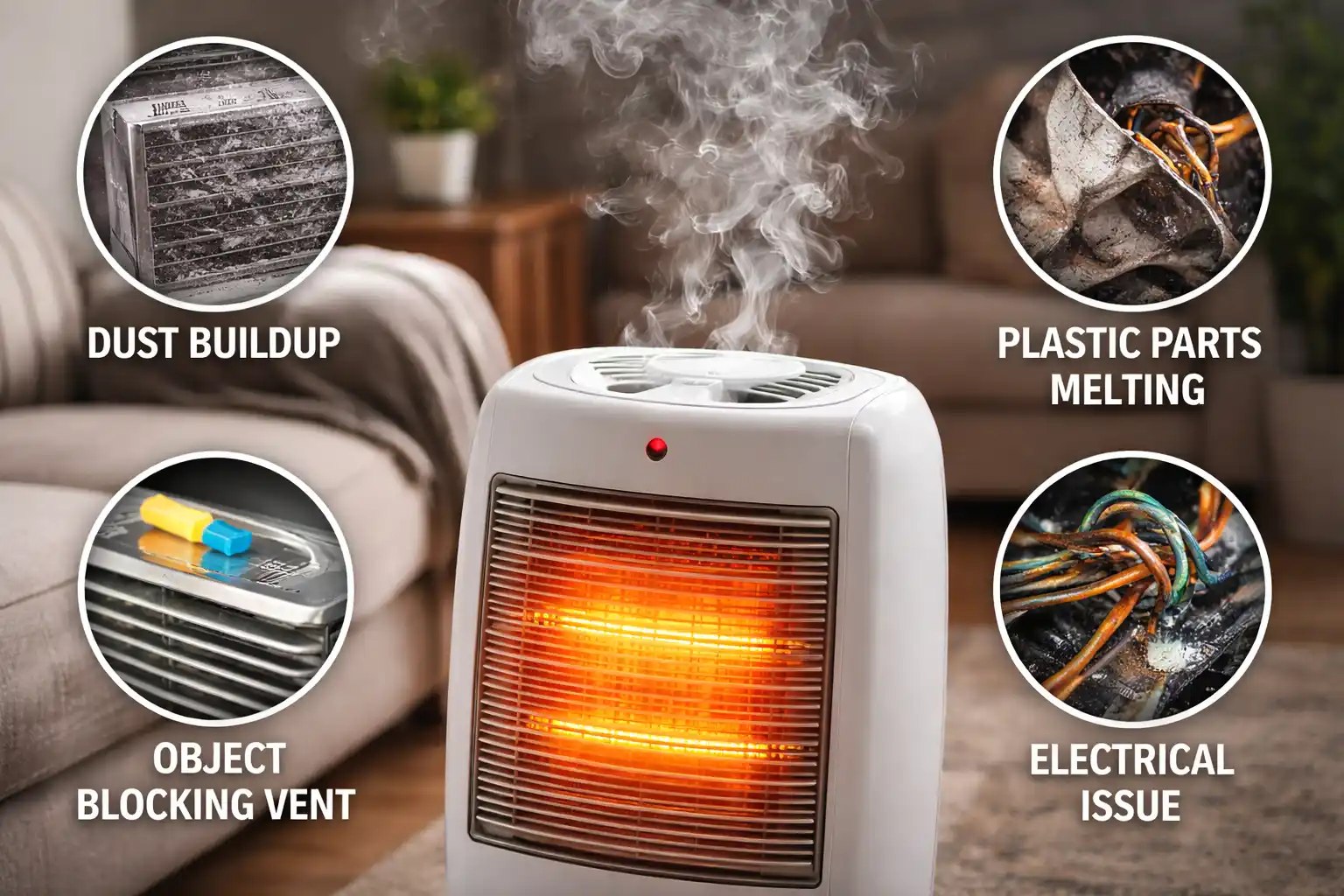
A burning plastic odor usually means something in or around the heating system is getting too hot. That could include dust on internal parts, debris near vents, or plastic materials that have shifted too close to heated components. The smell may be brief when the system first starts, but it should not linger or intensify during normal use.
In more serious cases, the odor comes from overheating electrical parts, melting wire insulation, or worn components inside the blower or motor assembly. These issues can create a sharper, more chemical smell than ordinary dust. If the odor appears with flickering power, strange noises, or reduced airflow, the cause is more likely mechanical or electrical than cosmetic.
Dust Buildup on Heating Components
Dust can settle on heating elements, burners, or nearby internal surfaces during months when the heater is not in use. When the system turns on, that buildup burns off and creates a hot, unpleasant smell that some people mistake for melting plastic. This type of odor is often temporary and fades after a short time, but if the smell becomes intense, lasts too long, or returns often, there may be more than simple seasonal dust involved.
Electrical Issues or Overheating Parts
Electrical problems are one of the more concerning reasons a heater may smell like burning plastic. Wire insulation, plastic connectors, or control components can begin to overheat if the system is drawing too much power or a part is failing.
This type of smell is often sharper and more chemical than dusty heat. Instead of fading quickly, it may get worse as the heater keeps running, especially if the same overheated part continues to warm up under load.
Loose wiring, a failing blower motor, or worn internal parts can all create excess heat inside the unit. Because these issues can damage the system or create a fire risk, a persistent burning plastic smell should always be taken seriously and checked promptly.
Plastic or Debris Near Vents
Sometimes the smell does not come from the heater itself but from something too close to a vent or register. Plastic bags, toys, storage bins, furniture covers, and other household items can warm up quickly when heated air blows against them. Dust and lint trapped around vent openings can also create a hot smell that resembles burning material. Checking the area around every supply vent is a simple step that can rule out a surprisingly common cause.
Fixing Dust and Debris Issues
If the odor seems mild and there are no signs of smoke, electrical trouble, or visible damage, start with basic cleaning and inspection. Turn the heater off, let it cool, and check vents, registers, and nearby areas for plastic items, lint, pet hair, or dust buildup. Replace a dirty air filter if needed, since restricted airflow can make the system run hotter and push stale debris odors through the house more noticeably. For homes that rely on oil heat, routine seasonal service for an oil-based heating system can also help catch buildup before it becomes a bigger issue.
After cleaning accessible areas, run the heater briefly and pay attention to whether the smell fades or returns. A temporary odor that improves quickly may have been caused by dust burning off. However, if the plastic smell remains strong, comes back repeatedly, or spreads through multiple rooms, do not keep testing the system over and over. At that point, the issue may be internal and require a professional inspection.
Electrical Burning Plastic Smells
An electrical burning plastic smell is more urgent than a light dusty odor because it may mean wiring insulation, connectors, circuit boards, or motor-related parts are overheating inside the unit. This type of smell often feels sharper, harsher, and more artificial than normal heater startup odors. If it appears suddenly, grows stronger, or happens alongside unusual noises or poor heater performance, shut the system off immediately and avoid using it again until it has been professionally checked.
Signs of Electrical Problems
Electrical issues usually leave more than one clue, so pay attention to what happens besides the smell itself. A burning plastic odor paired with performance changes or visible warning signs should be treated as a strong indication that something inside the heater is overheating or failing. Even if the system still runs, continuing to use it can increase damage and risk.
- Sharp plastic or chemical burning smell
- Buzzing, clicking, or humming noises
- Weak airflow or inconsistent heating
- Smoke, sparks, or flickering lights
- Heater shutting off unexpectedly
Call an HVAC Technician
If the smell points to overheating plastic or electrical trouble, calling an HVAC technician is the safest next step. A trained professional can inspect wiring, motors, control boards, and other internal parts that are not safe to diagnose casually. This matters because the odor may come from a failing component hidden inside the cabinet, not from anything visible near the vents. If the inspection shows the system is aging and repairs are no longer the smartest investment, it may be worth discussing a more complete heating-system upgrade instead of repeated temporary fixes.
Preventative Measures to Avoid Burning Plastic Smells
Routine maintenance is one of the best ways to reduce the chance of unusual heater odors. Changing the air filter on schedule helps airflow stay consistent, which keeps the system from running hotter than necessary. It also reduces the amount of dust and debris circulating through the unit. Keeping vents open and clear of plastic items, storage boxes, fabrics, and clutter lowers the risk of heated air warming something that should not be near the system.
Annual heating inspections are also important because they allow small electrical or mechanical issues to be found before they create a stronger odor or a breakdown. During maintenance, a technician can check for worn wiring, overheating parts, dirty components, and restricted airflow. If you are outfitting a home with oil heat, proper setup of a new oil-fired heating system also helps reduce avoidable performance problems from the start.
Different Odors from Your Heater
Not every unpleasant heater smell means the same thing, which is why the type of odor matters. A dusty smell may be normal at startup after months of nonuse, while musty air can point to moisture or mold concerns. A burning plastic odor often suggests something is too hot, whether inside the unit or near a vent. A sulfur or rotten eggs smell is more serious still and may indicate a gas-related hazard that requires immediate action.
Musty Smell
A musty smell from a heater usually points to moisture, stale dust, or microbial growth somewhere in the system rather than overheated plastic. This odor is often more damp and earthy than sharp or chemical. It may come from dirty ductwork, a clogged filter, or moisture that has built up around internal components, especially if the HVAC system has not been cleaned or serviced regularly.
While a musty odor is not the same as a burning smell, it still deserves attention because it can affect indoor air quality and signal maintenance problems. Replacing the filter, checking for moisture issues, and having the system inspected can help identify the source. If the smell is strong and persistent, a deeper cleaning or service visit may be needed to stop it from circulating through the home.
Burning Plastic Smell
A burning plastic smell is one of the more alarming odors a heater can produce because it often suggests excessive heat around synthetic materials, wiring insulation, or internal components. Unlike ordinary dust burnoff, this smell tends to feel sharper and more artificial. It may appear near the unit itself, at vents, or throughout the home depending on where the overheating source is located.
Sometimes the cause is external, such as a plastic storage item, toy, bag, or cover sitting too close to a vent. In other cases, the source is internal and involves overheating parts or electrical problems that cannot be safely diagnosed without opening the system. That difference matters because a simple cleanup may solve one issue, while the other could continue to worsen every time the heater starts.
If the odor lingers, intensifies, or comes with buzzing, poor airflow, smoke, or system shutdowns, stop using the heater right away. A true burning plastic smell should be treated as a safety concern, not as a nuisance. When this keeps happening with an older oil unit, homeowners often start considering replacing an aging oil heater before the problem gets worse.
Rotten Eggs Smell
A rotten eggs smell is very different from burning plastic and should be treated as an emergency concern, especially if you have a gas furnace. Utility companies add a sulfur-like odor to natural gas so leaks are easier to notice. If that smell appears near the heater, do not assume it is a normal system odor or something that will fade after the furnace keeps running.
Turn the system off if you can do so safely, leave the area, and follow appropriate emergency steps for a suspected gas leak. Do not use light switches, open flames, or anything that could create a spark. A sulfur smell requires immediate attention because the risk is not just equipment damage but also fire, explosion, or dangerous indoor air conditions that need urgent professional response.
Safety First: Immediate Steps to Take
When a heater smells like burning plastic, safety should come before troubleshooting. The exact cause may be minor, but the odor can also signal overheating parts, melting insulation, or another issue that becomes more dangerous the longer the system runs. Acting quickly helps reduce risk and gives you a better chance of stopping damage before it spreads. Start with the simplest protective step: turn the heater off and do not keep testing it repeatedly if the smell continues.
Turn Off Your Heater
Turning off the heater is the first and most important response when you notice a burning plastic smell. Shutting the system down stops additional heat from building around the possible source and reduces the chance of more damage while you investigate. Once the unit is off, check for obvious debris near vents, listen for unusual sounds, and look for visible smoke. If the smell is strong, persistent, or clearly electrical, leave the heater off and contact a professional.