If your AC turns on and off every 5 minutes, the system may be short cycling, which means it is stopping before completing a normal cooling cycle and then restarting again too soon. This can happen for several reasons, including thermostat issues, airflow restrictions, dirty coils, refrigerant problems, incorrect system sizing, or installation mistakes. Even if the house still feels somewhat cool, this pattern should not be ignored because frequent cycling can increase energy use, create uneven temperatures, and place extra stress on major components. In some cases, the cause is simple, like a clogged filter, but in others it can point to a larger performance problem that needs professional attention before wear and repair costs start to build up.
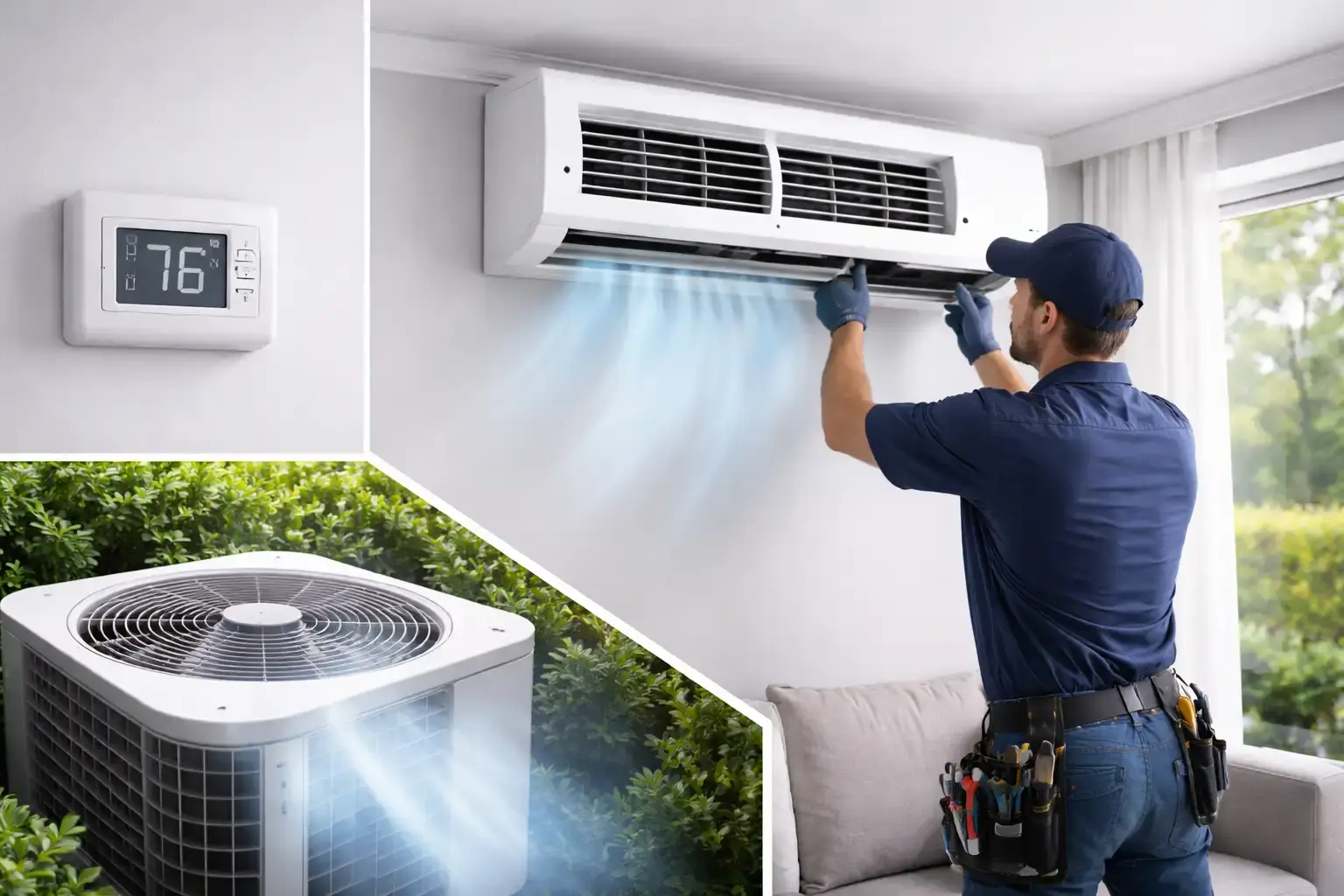
Common Reasons Your AC Turns On and Off Every 5 Minutes
An air conditioner is supposed to run in steady cycles long enough to cool the home and control humidity. When it starts and stops every few minutes, that rhythm is disrupted, and the system may no longer be operating efficiently. Short, repeated cycles can be caused by equipment that is too large, too small, poorly installed, or struggling with airflow and control problems. Homeowners often notice the behavior first because the outdoor unit keeps clicking on and off or because the home feels cool for a moment and then uncomfortable again. While the symptom looks simple, the root cause can vary quite a bit from one system to another.
That is why it helps to look at the system as a whole rather than assuming the issue comes from a single part. A thermostat setting, a dirty component, a refrigerant imbalance, or a sizing mismatch can all lead to similar cycling behavior. In many homes, the real problem only becomes clear after a complete system inspection that checks controls, airflow, cooling performance, and installation quality together. Once the root cause is identified, it becomes much easier to decide whether the solution is a simple adjustment, routine service, or a more involved repair.
An Oversized Air Conditioner
An oversized air conditioner is one of the most common causes of frequent on-and-off cycling. When a system is too powerful for the home, it cools the air too quickly and reaches the thermostat setting before it has completed a healthy run cycle. That sounds beneficial at first, but it actually creates a problem because the unit keeps shutting off after short bursts of operation and then starting again a few minutes later when the temperature rises. This constant restarting can increase wear on key components and make the system less efficient over time.
Oversized equipment can also hurt comfort even when the home feels cold enough at first glance. Because the AC is not running long enough, it may not remove humidity as effectively as it should. That can leave the home feeling clammy, sticky, or unevenly cooled, especially during hot and humid weather. The house may technically reach the set temperature, but it will not necessarily feel comfortable. This is one reason proper AC sizing matters just as much as raw cooling power.
If the system has always cycled too quickly or if the issue began after a major equipment change, the unit may simply be the wrong fit for the home. In those situations, temporary adjustments will not fully solve the problem because the mismatch is built into the system itself. When repeated short cycles are tied to equipment size, reviewing options for an outdoor unit change may be necessary to restore normal performance and better cooling balance.
An Undersized Air Conditioner
An undersized air conditioner can also create unusual cycling behavior, although it usually struggles in a different way than an oversized unit. Instead of cooling too fast, a system that is too small may run often because it has difficulty keeping up with the home’s cooling demand. In some homes, that strain leads to repeated starts and stops as the system tries to respond to thermostat calls without ever reaching steady, efficient operation. This problem may become more obvious during very hot afternoons, when indoor temperatures climb faster than the AC can manage. An undersized system can leave certain rooms warmer than others, drive up energy use, and make the air conditioner seem unpredictable even though the real issue is that the equipment does not match the home’s cooling load.
Poor AC Installation
Poor AC installation can cause short cycling even when the equipment itself is brand new. If airflow was not set correctly, the refrigerant charge was not balanced properly, the thermostat was placed in a bad location, or the unit was not matched correctly to the home, the system may begin cycling before it ever has a chance to operate normally. Installation problems often create performance issues that feel random to the homeowner because the AC may still cool sometimes while repeatedly turning on and off. If the problem started after a recent replacement or equipment upgrade, it is worth taking a close look at whether the cooling system setup was completed correctly from the start.
- Incorrect airflow adjustments can force the system to shut off too soon.
- Poor thermostat placement can cause false temperature readings.
- An improper refrigerant charge can affect cooling cycles and pressure.
- Mismatched components can prevent stable operation.
- Bad installation can make a new AC behave like a failing one.
Thermostat Problems
Thermostat problems are another common reason an AC turns on and off every 5 minutes. If the thermostat is misreading the indoor temperature, losing calibration, or placed too close to a vent, window, or heat source, it may tell the system to stop and start at the wrong times. The AC may respond exactly as commanded, but the commands themselves are based on inaccurate information. In some cases, a loose wire, dying battery, or faulty sensor can create the same pattern, making the problem look like an equipment failure when it is really a control issue.
Thermostat-related cycling can also happen when settings are changed too often or when the device is not communicating well with the HVAC system. Homeowners may notice that the temperature displayed on the thermostat does not match how the room actually feels, or that the system shuts off almost immediately after starting. Because thermostat issues can overlap with deeper cooling problems, it is often best to rule out the basics first and then move into a targeted cooling repair visit if the cycling continues after settings and batteries have been checked.
Dirty Condenser Coils
Dirty condenser coils can interfere with heat transfer and cause the AC to cycle abnormally. The outdoor coil is supposed to release heat collected from inside the home, but when it becomes coated with dirt, debris, pollen, or grass clippings, that process becomes less efficient. As pressure and temperature conditions shift, the system may begin shutting down sooner than it should or struggle to maintain stable cooling cycles. This kind of performance issue often develops gradually, which means homeowners may not notice the coil condition until the AC starts acting differently.
A dirty coil does not just reduce efficiency. It can also place extra strain on the compressor and other important components, especially during hot weather when the system is already working harder. If short cycling appears alongside weaker cooling, rising energy bills, or a hotter-than-normal outdoor unit, coil buildup is worth considering. In many cases, regular seasonal AC service helps prevent this problem by keeping major cooling components cleaner and allowing technicians to catch performance issues before they trigger more serious stress on the system.
Leaky Ductwork
Leaky ductwork can contribute to frequent cycling because cooled air may be escaping before it reaches the rooms that need it. When that happens, the system may cool certain areas too quickly while other parts of the home remain too warm, creating temperature imbalances that confuse the thermostat and disrupt normal run times. Duct leaks can also reduce airflow, making the AC work harder to deliver the same level of comfort. In some homes, the unit cycles on and off repeatedly because the thermostat senses changing temperatures near the return area while the rest of the house never feels consistently cooled. If duct leakage is severe enough, it can make an otherwise functional AC appear unreliable.
Low Refrigerant Pressure
Low refrigerant pressure can cause an AC to behave unpredictably, including turning on and off more often than normal. Refrigerant is essential for absorbing and releasing heat, so when the charge is low, the system cannot cool properly. That can trigger pressure-related problems, poor temperature control, and strain on the compressor. Homeowners sometimes describe this as the AC trying to start, running briefly, and then stopping without fully cooling the home. Because refrigerant does not get “used up” under normal conditions, low pressure usually points to a leak, an incorrect charge, or another system issue that should be diagnosed rather than simply topped off.
| Possible Sign | What It Can Suggest | Why It Matters |
| Weak cooling | Refrigerant level may be too low | The AC may not complete normal cooling cycles |
| Ice on the line or coil | Pressure imbalance or restricted heat absorption | System performance can drop quickly |
| Hissing or bubbling sounds | Possible refrigerant leak | Leaks require repair, not just recharge |
| Short run times | Cooling process may be unstable | Frequent cycling can increase compressor stress |
A Clogged or Damaged Air Filter
A clogged or damaged air filter is one of the simplest causes of AC cycling problems, but it can have a surprisingly large impact on performance. When the filter is packed with dust and debris, airflow through the system becomes restricted. That can change operating temperatures inside the equipment, reduce cooling output, and make the unit behave irregularly. In some cases, the AC may shut off sooner than expected because it cannot move air properly. Homeowners often overlook the filter because it seems too minor to cause a noticeable problem, but poor airflow can affect the entire cooling cycle.
A damaged filter can create issues as well, especially if it is bent, collapsed, or installed incorrectly. Instead of protecting the system, it may allow debris to reach internal components or disrupt airflow in ways that reduce efficiency and comfort. Checking the filter is one of the fastest first steps when an AC begins turning on and off too often. If replacing it does not improve the situation, the repeated cycling may be tied to a deeper issue elsewhere in the system. Even so, keeping the filter clean is essential because it supports airflow, helps the AC run more steadily, and reduces avoidable stress during the cooling season.
AC Short Cycling Issues
AC short cycling is both a symptom and a problem in itself. The phrase describes a system that starts, runs for too little time, shuts off, and then restarts again before a normal cooling cycle has finished. That pattern can come from many of the causes above, but once it starts, it creates its own set of consequences. Frequent starts are harder on components than longer, stable run cycles, especially for the compressor and electrical controls. The system uses more energy during repeated startup phases, and the home may never reach the comfort level the thermostat is supposed to maintain.
The longer short cycling continues, the greater the chance that a manageable issue turns into a more expensive repair. What begins as a thermostat fault, dirty coil, or sizing problem can eventually lead to heavier component wear and poor humidity control throughout the home. If the AC is older and keeps short cycling despite repairs or adjustments, it may be time to evaluate whether a full AC upgrade would offer a more reliable long-term solution than continuing to chase the same cooling pattern again and again.